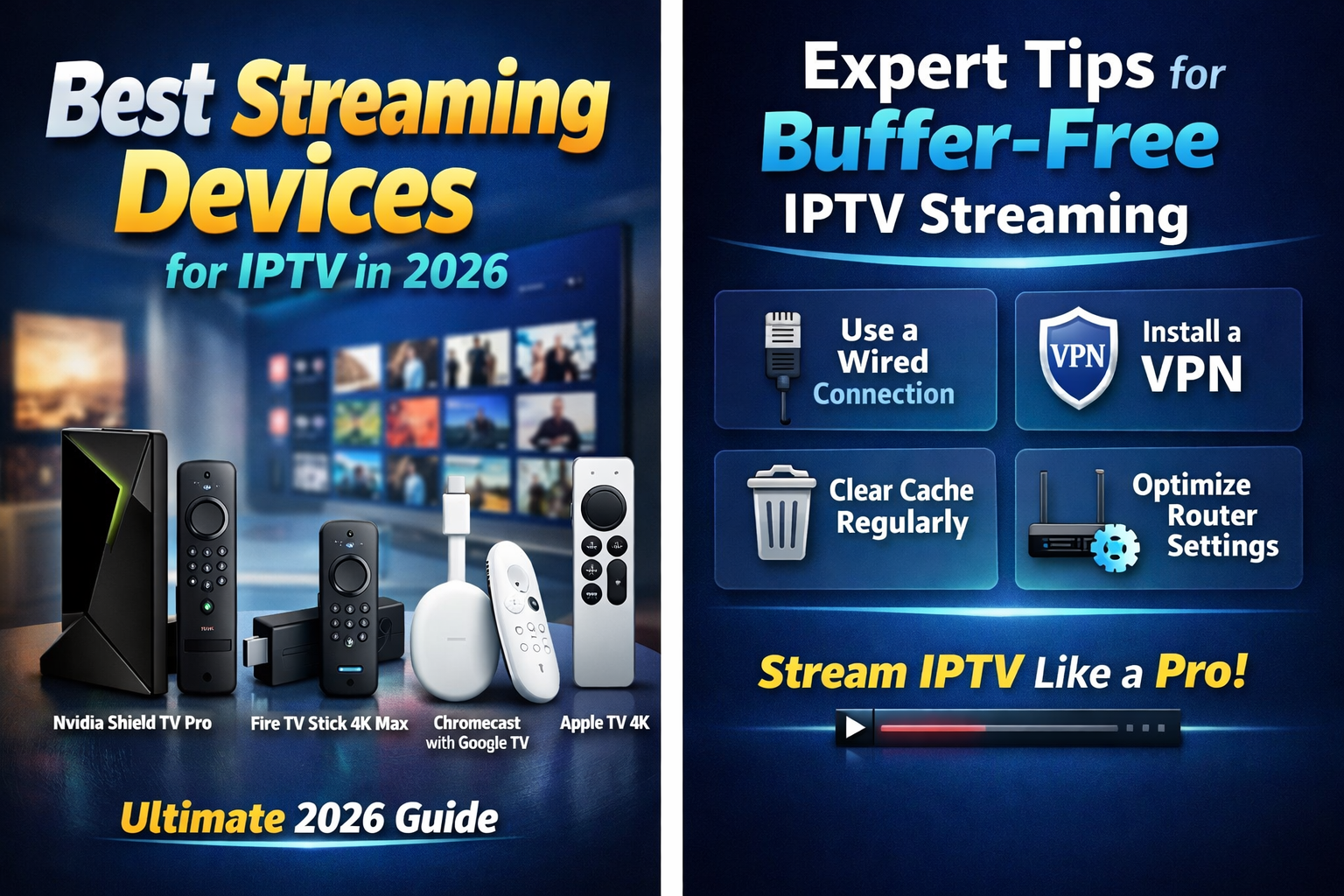
Choosing the best streaming device for TV for IPTV ensures seamless access to live TV channels, on-demand movies, and series in HD, 4K, or even 8K.
In 2026, dedicated streaming devices have become smarter, faster, and more powerful, capable of handling high-bitrate streams and complex IPTV apps with ease.
Whether you’re a casual viewer or a power user, pairing the right IPTV device with a reliable app like IPTV Smarters Pro, 8K Player, IBO Player, TiviMate, or Iron TV Max will transform your living room into a full-fledged entertainment hub.
IPTV and Streaming Devices
IPTV delivers television content over the internet rather than traditional satellite or cable connections. Unlike conventional broadcasting, IPTV allows you to watch live channels, movies, series, and sports on-demand, often with features such as catch-up TV, electronic program guides (EPG), and multi-screen support.
While many modern Smart TVs have built-in apps, they often lack the processing power required for advanced IPTV applications. This is where dedicated streaming devices come into play.
These devices are optimized for smooth playback, faster navigation, and better compatibility with premium IPTV apps.
Streaming devices also allow sideloading of apps that aren’t available on standard app stores, providing access to a wider range of IPTV services. This flexibility ensures that users can install apps like TiviMate or IPTV Smarters Pro directly and enjoy stable, high-quality streams.
Why Hardware Matters for IPTV
The hardware powering your streaming device has a direct impact on performance. Key hardware factors include:
- Processor and RAM: High-end processors and adequate RAM are crucial for decoding live video streams and loading EPGs without lag. Devices with at least 2–3GB of RAM handle multiple channels and apps smoothly.
- Graphics Support: For 4K or 8K streams, a capable GPU ensures crisp visuals and reduces stuttering.
- Connectivity: Devices with Gigabit Ethernet or Wi-Fi 6 support reduce buffering, especially when streaming high-bitrate IPTV channels.
- Storage: While most IPTV content streams live, extra storage allows for caching, recording, or offline playback.
Without strong hardware, even premium IPTV apps may perform poorly, leading to buffering, slow channel switching, or crashes during peak usage.
Difference Between Smart TV Apps and Dedicated Devices
Many users assume that modern Smart TVs can handle IPTV just as well as dedicated devices. While this is true for basic streaming, there are significant differences:
| Feature | Smart TV Apps | Dedicated IPTV Devices |
|---|---|---|
| Performance | Often limited; slow navigation with multiple apps | Optimized for high-performance streaming |
| App Compatibility | Limited to official app store | Full sideloading support for all IPTV apps |
| Video Quality | Supports up to 4K (depending on TV) | Supports 4K/8K, advanced decoding for high-bitrate streams |
| Network Stability | Usually Wi-Fi only; may struggle with HD streams | Gigabit Ethernet & Wi-Fi 6 support for minimal buffering |
| Advanced Features | Basic EPG and VOD | Recording, multi-screen, customizable interface, and frequent updates |
Dedicated streaming devices provide a superior experience for users looking to maximize IPTV features, ensuring smooth, buffer-free viewing for live TV, movies, and sports.
This section sets the foundation for the rest of the article, highlighting why device choice is crucial before diving into detailed device reviews, setup, and optimization tips.
I can continue writing the next sections, covering:
- Why You Need a Dedicated Device for IPTV
- Top Factors to Consider Before Buying
- Detailed Reviews of Nvidia Shield, Fire TV Stick, Chromecast, and Apple TV
Why You Need a Dedicated Device for IPTV
While many modern Smart TVs come with built-in apps, relying solely on them for IPTV often leads to a subpar experience.
Dedicated streaming devices are specifically designed to handle the high demands of IPTV apps, delivering faster performance, better app compatibility, and stable connectivity. Investing in a dedicated device ensures that your IPTV setup is smooth, reliable, and future-proof.
Faster Performance
One of the primary advantages of a dedicated streaming device is its processing power. IPTV apps often require significant resources to decode live streams, load electronic program guides (EPG), and run video-on-demand (VOD) content simultaneously.
Smart TVs, even high-end models, may struggle with these tasks due to limited CPU and RAM.
A dedicated device offers:
- Higher RAM: Typically 2–3GB or more, allowing multiple apps or streams to run without lag.
- Faster CPUs: Optimized for decoding HD, 4K, and 8K streams quickly.
- Smooth Navigation: Faster channel switching and menu responsiveness for a better user experience.
For example, devices like the Nvidia Shield TV Pro feature powerful processors that can handle multiple IPTV apps like IPTV Smarters Pro or TiviMate simultaneously, making high-bitrate streaming seamless.
Better App Compatibility
Dedicated streaming devices provide access to a wider range of IPTV applications. Unlike Smart TVs that are often restricted to their native app stores, Android-based devices or Fire TV sticks allow sideloading—the ability to install third-party APKs or apps not officially available.
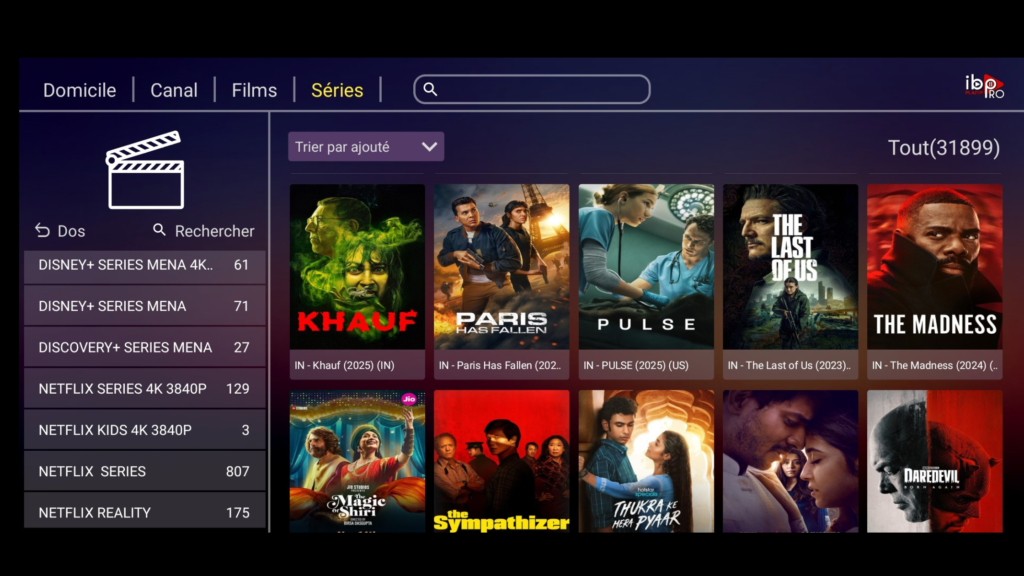
This means you can install premium IPTV apps like:
- TiviMate – Advanced channel management and recording
- 8K Player – Ultra-HD streaming up to 8K
- IBO Player – Lightweight and fast
- IPTV Smarters Pro – Beginner-friendly with multi-screen support
Better app compatibility ensures you can customize your IPTV experience, update apps frequently, and access all the features modern viewers expect.
Stable Connectivity
A dedicated device often provides superior network connectivity compared to a Smart TV, which is critical for high-bitrate IPTV streams. Reliable connectivity reduces buffering, pixelation, and sudden dropouts during live events.
Key advantages include:
- Gigabit Ethernet Ports: Wired connections ensure stable high-speed data transfer.
- Wi-Fi 6 Support: Handles high-bandwidth streaming efficiently with less interference.
- Optimized Network Chips: Dedicated devices have advanced antennas and firmware for reliable streaming.
For instance, the Fire TV Stick 4K Max supports Wi-Fi 6, while the Nvidia Shield TV Pro offers both Gigabit Ethernet and optimized wireless connectivity, delivering a jitter-free IPTV experience.
Top Factors to Consider Before Buying
Choosing the best streaming device for TV for IPTV requires more than just picking a popular brand. Your hardware directly impacts streaming performance, compatibility with IPTV apps, and overall user experience.
In 2026, high-quality IPTV streaming—especially in HD, 4K, or 8K—demands careful attention to four key factors: processing power & RAM, connectivity, operating system flexibility, and storage capacity.
1. Processing Power & RAM
IPTV apps are resource-intensive. They handle multiple live channels, video-on-demand libraries, and Electronic Program Guides (EPG), often simultaneously. Without sufficient processing power, your device may lag, freeze, or crash during playback.
What to look for:
- CPU: Look for a multi-core processor (quad-core or higher). Devices like the Nvidia Shield TV Pro use powerful Tegra X1+ chips to decode high-bitrate 4K and 8K streams smoothly.
- RAM: At least 2GB is recommended for HD streaming; 3GB or more is ideal for 4K/8K and multi-app usage.
- GPU/Video Decoding: A capable GPU ensures smoother rendering of high-resolution streams, especially for IPTV apps with advanced playback features.
Tip: Devices with higher RAM and processors not only improve video performance but also make navigation snappy, reducing frustration during channel switching.
2. Connectivity: Ethernet vs. Wi-Fi 6
A stable internet connection is critical for uninterrupted IPTV streaming. While Wi-Fi is convenient, it can struggle with high-bitrate 4K or 8K streams, especially in homes with interference or multiple devices.
Options to consider:
- Wired Ethernet: Offers the most stable and consistent connection. Gigabit Ethernet ports are preferable for 4K and 8K streams.
- Wi-Fi 6: Modern devices with Wi-Fi 6 support higher bandwidth, lower latency, and better performance over longer distances.
- Dual-band Wi-Fi: Ensure the device supports 2.4GHz and 5GHz to avoid network congestion.
Example: The Fire TV Stick 4K Max supports Wi-Fi 6, allowing smoother streaming than older Wi-Fi versions, while the Nvidia Shield TV Pro provides both Ethernet and Wi-Fi, making it highly versatile.
3. Operating System Flexibility
Operating system flexibility determines which apps you can install and how easily you can customize your IPTV setup.
Most premium IPTV apps work best on Android-based systems because they allow sideloading of apps that aren’t available in the official store.
Considerations:
- Android TV / Google TV: Supports sideloading, a large app library, and advanced customization. Apps like TiviMate, 8K Player, and IPTV Smarters Pro run flawlessly.
- Fire OS: Amazon’s Fire Stick OS allows sideloading but has fewer native IPTV apps.
- tvOS (Apple TV): Highly optimized and secure but has strict restrictions on third-party IPTV apps, making sideloading difficult.
Tip: If you plan to use multiple IPTV apps or playlists, Android-based devices generally offer the most flexibility.
4. Storage Capacity
While IPTV content is streamed live, storage still matters for app installations, caching, and recording content (if the device supports it). Low storage can cause performance issues or prevent you from installing multiple IPTV apps.
Recommendations:
- Minimum Storage: 8GB for basic setups.
- Optimal Storage: 16GB or higher for multiple apps and cached data.
- Expandable Storage: Devices with USB ports or SD card support allow recording or adding more apps.
Example: The Nvidia Shield TV Pro has USB 3.0 ports for external drives, ideal for recording IPTV streams or storing VOD content, whereas devices like Fire TV Stick 4K Max have limited internal storage and may require cloud or adapter solutions.
Summary: Before purchasing a device, ensure it has:
- High processing power and sufficient RAM for smooth playback
- Stable connectivity via Ethernet or Wi-Fi 6
- Flexible operating system for IPTV apps
- Adequate storage for apps, cache, and recording
By prioritizing these factors, you’ll avoid buffering, crashes, or app incompatibility, ensuring the best IPTV streaming experience.
The Best Streaming Devices for IPTV: Detailed Reviews
Choosing the best streaming device for TV for IPTV is crucial for enjoying smooth live TV, on-demand movies, and series in 4K or 8K. Below, we break down the top devices in 2026, detailing their features, pros and cons, and the type of user they are best suited for.
Nvidia Shield TV Pro: The Ultimate Powerhouse
Key Features
- Tegra X1+ processor with AI upscaling for near-4K quality
- 3GB RAM for seamless multitasking
- Gigabit Ethernet and Wi-Fi 6 for stable high-speed streaming
- Two USB 3.0 ports for external storage or DVR recording
- Android TV OS with full sideloading support
- Supports 4K HDR, Dolby Vision, and Dolby Atmos
Pros & Cons
Pros:
- Unmatched processing power for IPTV and gaming
- Smooth 4K/8K streaming with minimal buffering
- Supports multiple IPTV apps like TiviMate, IPTV Smarters Pro, and 8K Player
- Expandable storage via USB
Cons:
- Higher price point compared to budget devices
- Slightly more complex setup for beginners
Best For
- Power users seeking premium performance
- Users streaming multiple IPTV apps simultaneously
- Homes with wired Ethernet for stable 4K/8K streaming
Amazon Fire TV Stick 4K Max: Best Value for Money
Key Features
- Compact design with Wi-Fi 6 support
- 1.8GHz quad-core processor and 2GB RAM
- Supports Dolby Vision, HDR10+, and Dolby Atmos
- Easy sideloading of IPTV APKs
- Affordable entry-level price
Pros & Cons
Pros:
- Excellent balance of price and performance
- Easy to set up and use for beginners
- Supports most popular IPTV apps
- Compact and portable
Cons:
- Limited internal storage (8GB)
- Ethernet requires additional adapter
- Slightly less powerful than Nvidia Shield for heavy multitasking
Best For
- Average users wanting 4K IPTV streaming on a budget
- Beginners who want a simple, plug-and-play solution
- Anyone looking for Wi-Fi 6 performance without breaking the bank
Google Chromecast with Google TV: Smart Choice
Key Features
- Runs Google TV OS with access to full Play Store
- 1.9GHz quad-core processor and 2GB RAM
- Supports 4K HDR, Dolby Vision, and Dolby Atmos
- Voice-enabled remote with Google Assistant
- Sideloading support for third-party IPTV apps
Pros & Cons
Pros:
- Clean, content-first interface
- Affordable pricing
- Excellent integration with Google services
- Supports most IPTV apps like IBO Player, TiviMate, and IPTV Smarters
Cons:
- Limited storage (8GB) can fill quickly
- Less powerful than Nvidia Shield for simultaneous streams
Best For
- Users who want a clean, smart interface
- Google ecosystem users
- Homes that prioritize voice search and app flexibility
Apple TV 4K: Premium Ecosystem
Key Features
- Powered by the A15 Bionic chip for smooth performance
- tvOS operating system with high stability
- Supports 4K HDR, Dolby Vision, and Dolby Atmos
- Compatible with Apple IPTV apps like iPlayTV and Channels
- Sleek, ad-free interface
Pros & Cons
Pros:
- Extremely fast and reliable
- Best-in-class build quality
- Smooth integration with Apple devices
- Stable, ad-free user interface
Cons:
- Difficult to sideload non-Apple IPTV apps
- Higher price point than Android-based devices
- Limited app flexibility compared to Android TV
Best For
- Apple ecosystem users (iPhone, iPad, Mac)
- Viewers seeking premium, polished IPTV experience
- Users who value stability and aesthetics over app variety
Comparison Table: IPTV Device Specs
To make choosing the best streaming device for TV for IPTV easier, here’s a detailed comparison of the top devices, highlighting key specs, connectivity, and compatibility:
| Device | OS | RAM | Ethernet | Sideloading | Video Support | Best For |
|---|---|---|---|---|---|---|
| Nvidia Shield TV Pro | Android TV | 3GB | Yes (Built-in) | Excellent | 4K/8K HDR, Dolby Vision/Atmos | Power users, multi-app IPTV |
| Amazon Fire TV Stick 4K Max | Fire OS | 2GB | Adapter Required | Good | 4K HDR, Dolby Vision/Atmos | Beginners, budget users |
| Google Chromecast with Google TV | Google TV | 2GB | Wi-Fi only | Good | 4K HDR, Dolby Vision/Atmos | Google ecosystem, voice search users |
| Apple TV 4K | tvOS | 4GB | Yes (Wi-Fi + optional Ethernet) | Limited | 4K HDR, Dolby Vision/Atmos | Apple users, premium experience |
✅ Key Takeaways:
- Nvidia Shield TV Pro: Most powerful, ideal for 4K/8K streaming with multiple IPTV apps.
- Fire TV Stick 4K Max: Best value, great for casual viewers.
- Chromecast with Google TV: Smart interface, voice-enabled, perfect for Google users.
- Apple TV 4K: Premium device, seamless Apple ecosystem integration, limited sideloading.
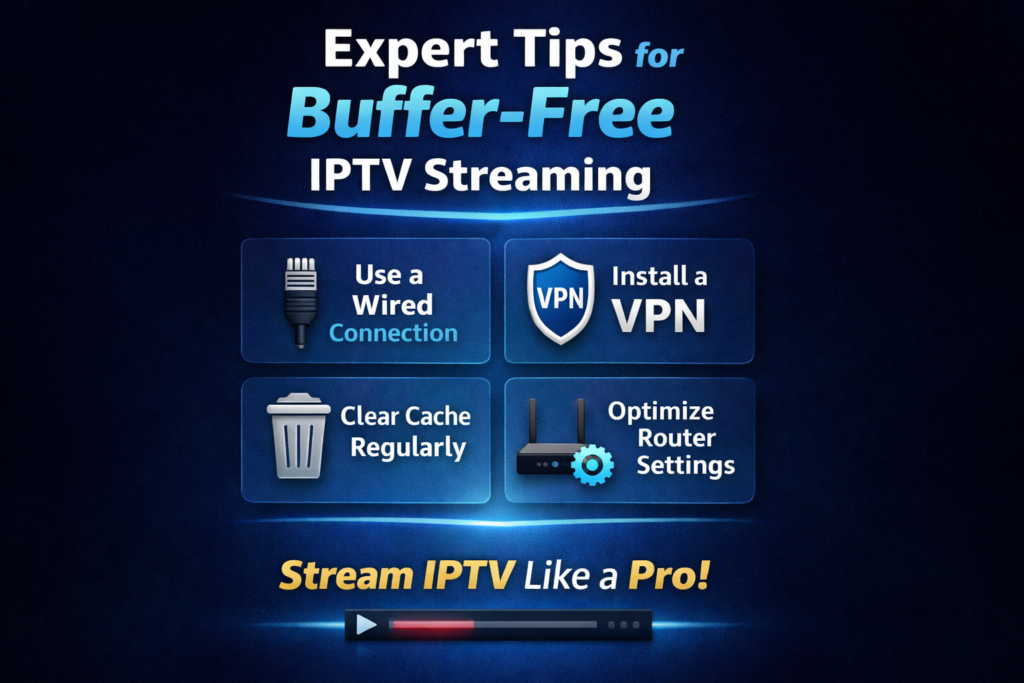
Expert Tips for a Buffer-Free IPTV Experience
Even the best streaming device requires proper setup and optimization to prevent buffering and enjoy smooth playback. Here are expert strategies to enhance your IPTV experience:
Use a Wired Connection
Whenever possible, connect your IPTV device via Ethernet cable. Wired connections provide:
- Stable, consistent bandwidth for high-bitrate streams
- Reduced latency and packet loss
- Better 4K/8K streaming performance
If Ethernet isn’t available, ensure your device supports Wi-Fi 6 for faster, more reliable wireless connections.
Install a VPN
Internet Service Providers (ISPs) may throttle IPTV traffic, causing buffering or lag. Using a VPN helps:
- Protect your privacy by hiding streaming activity
- Avoid throttling and maintain consistent speeds
- Access geo-restricted IPTV channels
Choose a fast, no-logs VPN with servers close to your location for minimal latency.
Clear Cache Regularly
IPTV apps store temporary data to speed up navigation, but excessive cache can slow performance. Clear your cache periodically to:
- Improve channel switching speed
- Reduce app crashes or freezing
- Maintain fast EPG (Electronic Program Guide) loading
Most apps, including IPTV Smarters Pro and TiviMate, provide a simple cache-clearing option in settings.
Optimize Router Settings
Proper router configuration ensures smooth streaming:
- Enable Quality of Service (QoS) to prioritize IPTV traffic
- Use 5GHz Wi-Fi for reduced interference and faster speeds
- Keep your router firmware updated to prevent security and performance issues
Bonus Tip: Position the router close to the device or use a mesh network for large homes to ensure strong signal strength in every room.
Common Issues and Troubleshooting for IPTV Devices
Even with the best streaming device for TV for IPTV, you may encounter occasional problems that disrupt viewing. Understanding common issues and how to fix them ensures uninterrupted, high-quality streaming.
Buffering Problems
Buffering is one of the most common frustrations with IPTV. Causes include slow internet, overloaded servers, or device performance issues.
Solutions:
- Check Your Internet Speed: For 4K IPTV streaming, a minimum of 15–20 Mbps is recommended, while 8K may require 50 Mbps or more.
- Use Wired Connections: Ethernet connections provide stable streaming and reduce Wi-Fi interference.
- Reduce Background Usage: Ensure no other devices are hogging bandwidth during IPTV playback.
- Update Your IPTV App: Developers often release updates to improve buffering and playback stability.
Pro Tip: Using apps like TiviMate or IPTV Smarters Pro with built-in buffering optimization can improve streaming performance.
App Crashes
IPTV apps may occasionally crash due to bugs, overloaded RAM, or incompatible software.
Solutions:
- Restart the App or Device: A simple reboot can clear temporary glitches.
- Clear App Cache: Removing stored cache data improves responsiveness.
- Update the App: Always use the latest version of the IPTV app.
- Check Compatibility: Make sure your device OS supports the IPTV app version.
Devices with higher RAM, such as the Nvidia Shield TV Pro, handle multitasking better and are less prone to crashes than lower-end options.
Connectivity Drops
Sudden loss of connection can interrupt IPTV playback. Causes may include Wi-Fi interference, weak signal, or server issues from your IPTV provider.
Solutions:
- Use a Wired Ethernet Connection: Reduces signal drops common with Wi-Fi.
- Optimize Wi-Fi Settings: Switch to 5GHz band, enable Wi-Fi 6 if supported, and reduce interference from other electronics.
- Check Router Placement: Keep the router close to the streaming device or use a mesh system for large homes.
- Verify IPTV Server Status: Sometimes, connectivity issues are caused by the IPTV provider, not your hardware.
Resolution Problems
Sometimes, IPTV streams may not display in full HD, 4K, or 8K. Common causes include device settings, app limitations, or bandwidth issues.
Solutions:
- Check Device Settings: Ensure your streaming device is set to the correct resolution (4K or 8K if supported).
- Adjust App Settings: Many IPTV apps allow manual selection of video quality.
- Ensure Sufficient Bandwidth: High-resolution streams require fast, stable internet.
- Update Firmware: Device firmware updates often include improvements to video decoding and output.
Pro Tip: Combining a capable device like Nvidia Shield TV Pro with a fast, wired connection ensures optimal resolution and minimal artifacts.
Accessories and Enhancements for IPTV Devices
To get the most out of your IPTV experience, investing in the right accessories and enhancements can significantly improve performance, convenience, and overall enjoyment.
External Storage for Recording
Many IPTV apps support recording live TV or saving video-on-demand content. Devices with USB or external storage support make it easy to store large amounts of content:
- USB 3.0 Drives: Fast read/write speeds allow smooth recording of 4K or 8K streams without buffering.
- External Hard Drives: Ideal for long-term storage of recorded shows and movies.
- Network Attached Storage (NAS): Advanced users can store and stream IPTV content across multiple rooms.
Pro Tip: Devices like Nvidia Shield TV Pro have USB ports for external drives, making them perfect for recording high-resolution IPTV streams.
HDMI 2.1 Cables for 4K/8K
For ultra-high-definition streaming, using the right HDMI cables is crucial:
- HDMI 2.1: Supports 4K at 120Hz and 8K at 60Hz, ensuring no signal degradation.
- HDR Support: Enables Dolby Vision and HDR10 for vibrant, lifelike colors.
- Future-Proof: HDMI 2.1 cables ensure compatibility with next-gen TVs and streaming devices.
Tip: Always buy certified HDMI cables from trusted brands to avoid compatibility issues.
Remote Control Alternatives
Some users prefer alternatives to the standard remote:
- Voice-Enabled Remotes: Devices like Chromecast with Google TV allow voice search, making navigation easier.
- Smartphone Apps: Many IPTV apps offer companion apps to control playback and adjust settings.
- Universal Remotes: Program universal remotes for all devices, reducing clutter and improving convenience.
How to Choose the Best Device for Your Needs
Selecting the right streaming device depends on budget, ecosystem, and viewing habits.
Budget vs Premium Options
- Budget Devices: Fire TV Stick 4K Max or Chromecast are affordable, easy to use, and perfect for casual viewers.
- Premium Devices: Nvidia Shield TV Pro or Apple TV 4K offer high-end performance, faster processing, and multi-app support for power users.
Tip: If you stream primarily in HD or 4K, budget devices suffice. For 8K, multi-screen IPTV, or recording, premium devices are worth the investment.
Device Ecosystem Considerations
- Android Ecosystem: Best for sideloading apps like TiviMate, IPTV Smarters Pro, or 8K Player.
- Apple Ecosystem: Ideal if you own iPhones, iPads, or MacBooks for smooth integration.
- Amazon Ecosystem: Offers excellent compatibility with Alexa and Fire TV apps.
Choosing a device within your preferred ecosystem simplifies updates, app compatibility, and remote management.
Screen Size and Viewing Distance
Your device should match your screen size and viewing distance:
- 4K TVs (up to 65”): Standard streaming devices handle 4K smoothly.
- 8K TVs (75”+): Devices like Nvidia Shield TV Pro provide the necessary processing power.
- Distance: Larger screens require higher resolution devices to avoid pixelation at close viewing distances.
Future-Proofing Your IPTV Setup
Investing in devices and strategies that remain relevant over the next few years ensures long-term value.
4K vs 8K Streaming
- 4K: Sufficient for most viewers; widely supported across IPTV apps.
- 8K: Future-ready; requires high-speed internet and devices with strong processors like Nvidia Shield TV Pro.
Tip: If upgrading a large 8K TV or planning multi-room streaming, prioritize devices that support 8K.
Software Updates and Support
- Choose devices with regular firmware updates to fix bugs and improve performance.
- IPTV apps like IBO Player or IPTV Smarters Pro frequently update for compatibility and new features.
- Devices with active support reduce the risk of app crashes and compatibility issues over time.
Multi-Room Streaming
- Some devices allow streaming across multiple rooms via apps or network solutions.
- Using Wi-Fi mesh networks or NAS setups ensures high-quality streams in every room.
- Premium devices like Nvidia Shield TV Pro can act as a hub for multi-room IPTV setups.
These considerations and accessories ensure that your IPTV setup in 2026 is not only high-performing but also future-proof, flexible, and scalable, whether you’re a casual viewer or a power user streaming 8K content.
FAQs About IPTV Devices and Streaming
What is the best streaming device for IPTV in 2026?
The Nvidia Shield TV Pro is widely regarded as the best overall device for IPTV in 2026 due to its powerful processor, 3GB RAM, Gigabit Ethernet, and support for 4K/8K streaming. It handles multiple IPTV apps simultaneously and supports external storage for recording content.
For budget-conscious users, the Amazon Fire TV Stick 4K Max offers excellent performance with Wi-Fi 6 support at a lower price.
Can I use a Smart TV instead of a dedicated device?
Yes, most modern Smart TVs have built-in apps and support for IPTV. However, they often lack the processing power, sideloading flexibility, and advanced features offered by dedicated streaming devices.
For HD/4K streaming, a Smart TV may suffice, but for 8K, multi-app use, or recording, a dedicated device like the Nvidia Shield TV Pro or Fire TV Stick 4K Max is recommended.
Do I need a VPN for IPTV?
A VPN is strongly recommended for IPTV streaming. It helps:
- Protect your privacy and prevent tracking
- Avoid ISP throttling, which can cause buffering
- Access geo-restricted IPTV channels safely
Choose a reliable, high-speed VPN to maintain smooth 4K or 8K streaming.
What internet speed is recommended for 4K IPTV?
- HD Streaming: 5–10 Mbps minimum
- 4K Streaming: 15–25 Mbps minimum
- 8K Streaming: 50 Mbps or higher
For consistent performance, a wired Ethernet connection or Wi-Fi 6 is preferred.
Are there budget-friendly devices for IPTV?
Yes, devices like Amazon Fire TV Stick 4K Max and Google Chromecast with Google TV provide excellent IPTV performance at a fraction of the cost of premium devices. These devices support most popular IPTV apps and deliver smooth HD/4K streaming for casual viewers.
Can these devices record IPTV content?
Yes, many dedicated devices support recording if the IPTV app allows it:
- Nvidia Shield TV Pro: Supports USB drives and external storage for recording streams.
- Fire TV Stick 4K Max: Limited recording options, requires cloud-based or app-supported storage.
- Chromecast & Apple TV: Recording depends on app support and storage limitations.
For reliable recording, devices with external USB storage or NAS support are ideal.
Conclusion
Choosing the best streaming device for TV for IPTV in 2026 is essential for a seamless, high-quality viewing experience.
Devices like Nvidia Shield TV Pro deliver unmatched performance for 4K/8K IPTV streaming, while options like Amazon Fire TV Stick 4K Max offer excellent value for beginners and budget-conscious users.
By considering processing power, connectivity, operating system flexibility, and storage, pairing the right device with a fast internet connection, and using enhancements like external storage, HDMI 2.1 cables, and VPNs, you can create a future-proof IPTV setup that supports live channels, movies, and series across multiple rooms.